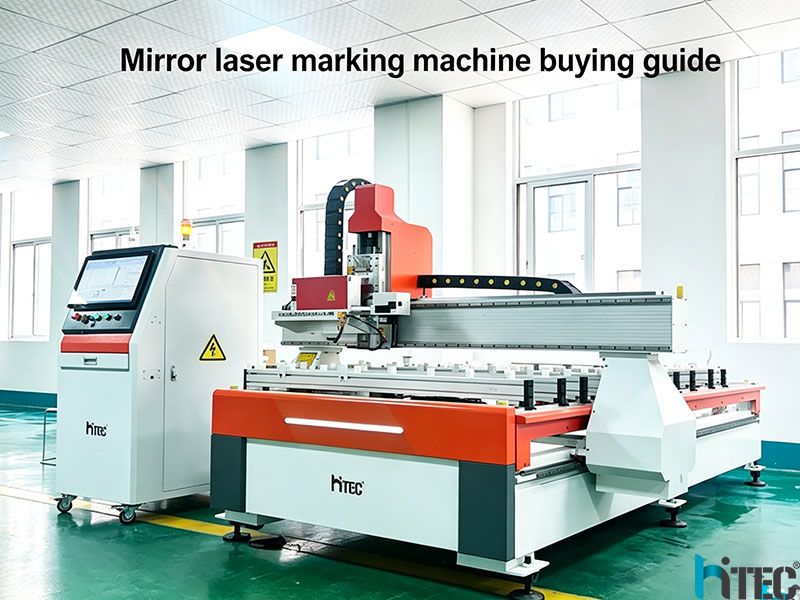
What Is Mirror Frosting (Glass Sandblasting Technology)?
Mirror frosting, also known as glass sandblasting, mirror engraving, or mirror etching, is a surface treatment process that creates a matte white frosted effect on reflective glass.
It is widely used in:
Bathroom mirrors
Decorative architectural glass
Hotel interior glass panels
Branding logos on mirrors
Custom luxury glass design
Unlike chemical etching or manual sandblasting, modern industrial systems use laser-based controlled frosting technology to ensure precision, repeatability, and scalability.
Why Mirror Frosting Is Moving to Laser-Based Industrial Systems
Traditional processes are being replaced because of:
❌ Chemical Etching Problems
High environmental compliance cost
Unstable batch quality
Hazardous chemical handling
High long-term operating cost
❌ Manual Sandblasting Problems
Low efficiency
High labor dependency
Inconsistent surface quality
Difficult to scale production
�� Industry trend:
From manual + chemical → to digital controlled laser frosting systems
M8 Generator Technology for Mirror Frosting (Key Industrial Standard)
Most suppliers confuse buyers by promoting UV laser systems for glass frosting.
However, industrial mirror frosting production relies on a different core system:
✔ M8 Mirror Frosting Generator System
The M8 system is specifically designed for:
Stable energy control on reflective glass
Large-area uniform frosting
High-speed industrial batch production
Consistent surface texture output
M8 vs UV Laser for Mirror Frosting
Feature
M8 Generator System
UV Laser System
Application
Industrial mirror frosting
Fine micro marking
Stability
Very high for mass production
Sensitive calibration
Speed
Fast large-area processing
Slower
Cost efficiency
High ROI production system
High cost per output
Best use case
Mirror sandblasting business
Precision engraving only
Key conclusion:
UV is for micro marking. M8 is for industrial mirror frosting production.
How Mirror Frosting Machines Work (Industrial Principle)
The process is based on controlled micro-ablation:
M8 generator outputs stable energy pulses
Energy is distributed evenly on glass surface
Micro surface structure is modified
Light scattering creates frosted white effect
Result:
No chemical reaction
No consumables
Fully digital controlled production
Mirror Frosting Machine Cost Analysis (Industrial Reality)
When evaluating a mirror frosting machine, the real cost is not machine price — but cost per production area (m²).
1. Traditional Production Cost
Chemical Etching
Chemicals consumption: continuous cost
Waste disposal: additional compliance cost
Labor: medium
Quality consistency: unstable
Problem:
High recurring cost + environmental burden
Manual Sandblasting
High labor dependency
Low automation
Slow production speed
High rework rate
Problem:
Not scalable for industrial production
2. M8 Mirror Frosting System Cost Structure
Electricity: low
Labor: 1 operator can manage system
Consumables: nearly zero
Maintenance: low
Key advantage:
Very low marginal cost per square meter after setup
ROI Analysis (Return on Investment for Mirror Frosting Business)
This is the most important factor for buyers.
Example Industrial ROI Model
Assumptions:
Machine price: 15000$-19800$
Production capacity: 30–80 m²/day
Selling price: $5 – $20 per m²
Working days: 25 days/month
Monthly Revenue Scenarios
Conservative scenario
30 m² × $5 × 25 = $3,750/month
Medium scenario
50 m² × $10 × 25 = $12,500/month
High efficiency scenario
80 m² × $15 × 25 = $30,000/month
ROI Payback Period
Depending on production scale:
Typical ROI: 3–8 months
Why M8 System Has Higher ROI
Compared to UV or chemical systems:
No consumables cost
Faster production speed
Lower defect/rework rate
Stable batch output
Less operator skill dependency
Conclusion:
ROI comes from production stability, not machine price alone.
Key Buying Factors for Mirror Frosting Machine
1. Generator System (Critical)
M8 industrial frosting generator required
Avoid general-purpose laser systems
2. Processing Size
600×600mm
1300×900mm
1300×2500mm large format systems
3. Motion System Stability
Gantry XY structure
Linear guide rails
High repeat accuracy (<0.02mm)
4. Software System
Supports bitmap + vector processing
Multi-layer control
Adjustable frosting density
5. Glass Compatibility
Mirror glass
Coated reflective glass
Decorative architectural glass
Common Problems in Low-End Machines
❌ Uneven frosting effect
Caused by unstable energy distribution
❌ Edge burning or yellowing
Improper pulse control
❌ Glass cracking
Wrong system selection or unstable beam
❌ Large format distortion
Weak mechanical structure